Related News

Rajkot one of 40 global cities to cut carbon emissions
Gujarat's 'solar city — Rajkot in Saurashtra — is being globally recognized as a case study for reducing carbon emissions. As per report by World Resources Institute (WRI), a US-based organization, presented at the UN Climate Change Conference in Peru, Rajkot will be able to reduce 14 per cent cent of its carbon dioxide emissions by 2016.
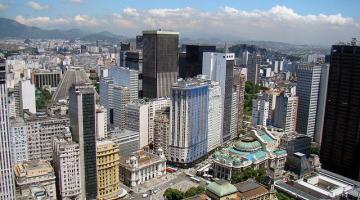
Hundreds of Cities Poised to Replicate Rio’s Approach to Measuring and Reducing Emissions
Rio de Janeiro is one of the world’s leading cities injecting sustainability into its planning. In 2011, Mayor Eduardo Paes enacted an ambitious climate change law, setting a goal to avoid 20 percent of its emissions by 2020, based on 2005 levels. There was only one problem: The city wasn’t sure just how much it was emitting, or where its emissions were coming from.

RELEASE: Launch of First Global Standard to Measure Greenhouse Gas Emissions from Cities
Today the World Resources Institute (WRI), C40 Cities Climate Leadership Group (C40) and ICLEI - Local Governments for Sustainability (ICLEI) launched the first widely endorsed standard for cities to measure and report their greenhouse gas (GHG) emissions at a COP20 event featuring mayors and officials from cities around the world.